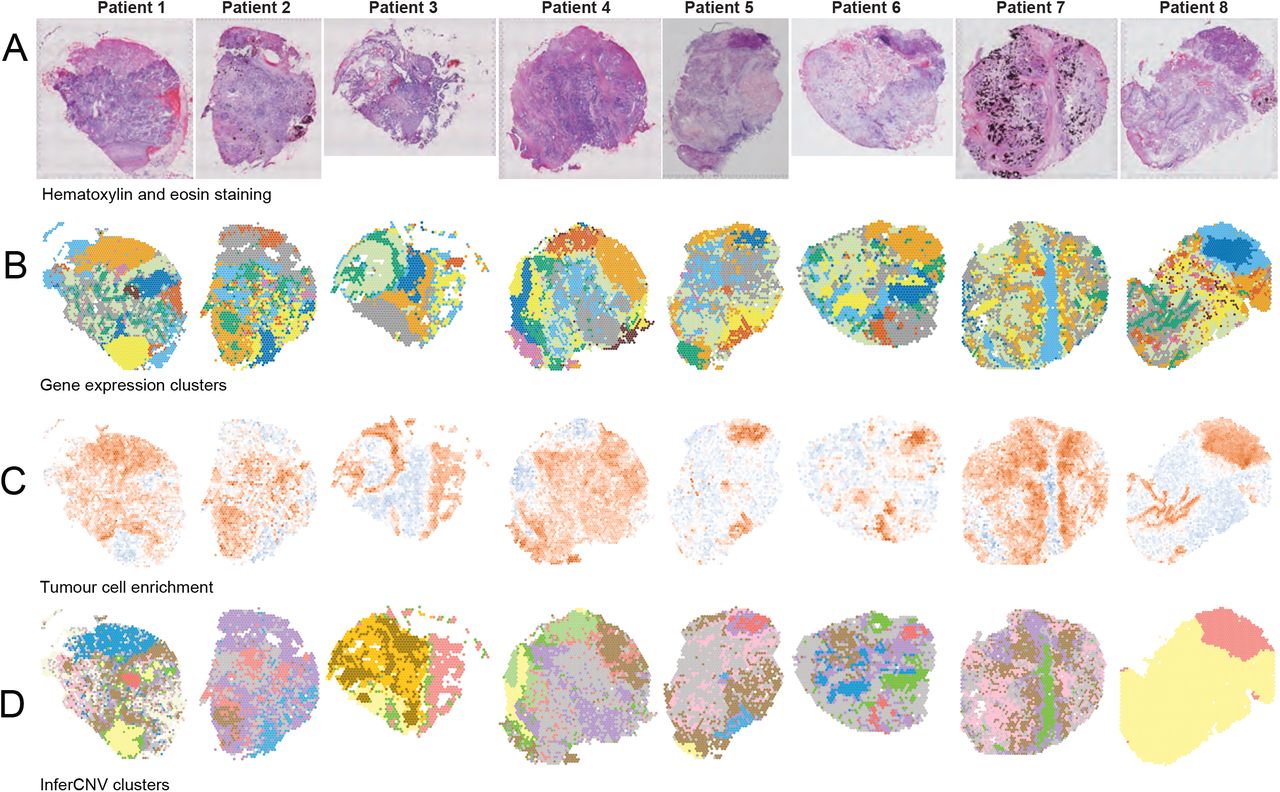
Spatial transcriptomics reveals ovarian cancer subclones with distinct tumour microenvironments
High-grade serous ovarian carcinoma (HGSOC) is characterised by recurrence, chemotherapy resistance and overall poor prognosis. Genetic heterogeneity of tumour cells and the microenvironment of the tumour have been hypothesised as key determinants of treatment resistance and relapse. Here, using a combination of spatial and single cell transcriptomics (10x Visium and Chromium platforms), we examine tumour genetic heterogeneity and infiltrating populations of HGSOC samples from eight patients with variable response to neoadjuvant chemotherapy.
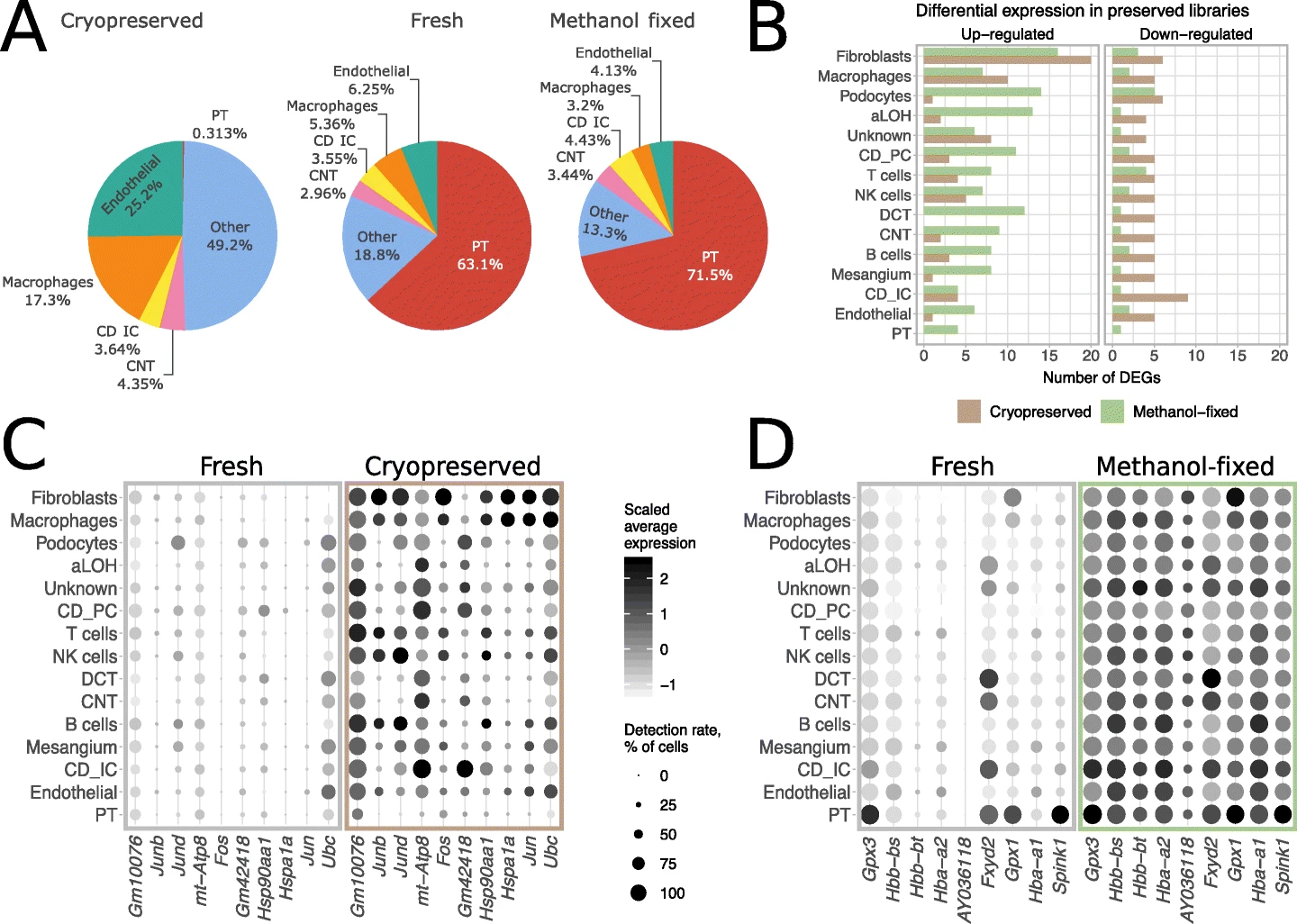
Systematic assessment of tissue dissociation and storage biases in single-cell and single-nucleus RNA-seq workflows
Single-cell RNA sequencing has been widely adopted to estimate the cellular composition of heterogeneous tissues and obtain transcriptional profiles of individual cells. Multiple approaches for optimal sample dissociation and storage of single cells have been proposed as have single-nuclei profiling methods. What has been lacking is a systematic comparison of their relative biases and benefits. In this paper, we compared several methods to determine the benefits and drawbacks. The above figure (Figure 3 from the manuscript) highlights some of the differences.
Research Overview
Professor Forrest’s research focuses on using cutting-edge genomic techniques, in particular next generation DNA sequencing and computational approaches (bioinformatics) to understand how cells work at a system level. He has extensive experience in next generation sequencing (NGS) and has published using a variety of platforms (Roche, SOLiD, Illumina and Helicos) and protocols (RNA-seq, CAGE, small RNA, ChIP-seq). The move to Perkins in 2015 is allowing him to translate his basic research on mammalian systems onto clinically relevant questions such as identification of novel cancer biomarkers and drug targets. (from perkins website)